

Guelph Investment Property Guide

A Complete Guide to Real Estate Investing in Guelph Ontario

By Wilson Li, Guelph Real Estate Agent


Guelph has become one of the most reliable and stable real estate markets for investors in Ontario. With a strong student population, a growing workforce, low vacancy rates and consistent long term appreciation, the city offers excellent opportunities for both new and experienced investors. This guide will walk you through the best neighbourhoods, property types, rental strategies and what you can expect when investing in Guelph real estate.
1.  Why Invest in Guelph


Guelph attracts investors from across Ontario because it combines stability, demand and strong fundamentals.


Low Vacancy Rates

Rental demand is steady throughout the year thanks to students at the University of Guelph, young professionals, families moving from the GTA and essential workers. Guelph’s vacancy rates remain consistently below the provincial average, which means properties rent quickly and stay occupied.


Strong Appreciation

For more than a decade, Guelph has seen steady and reliable price growth. Even during softer markets, the city continues to outperform many nearby regions.


Stable, Diverse Economy

Guelph has a strong employment base including agriculture and food industries, healthcare, education, manufacturing, technology and professional services. This economic stability helps keep rental demand strong and consistent.


High Quality of Life

Guelph is clean, safe and well known for its parks, trails, schools and community focus. Tenants tend to stay longer and treat homes well, which creates an ideal environment for long term investing.

2. Best Types of Investment Properties in Guelph

Guelph offers several strong investment options, each with its own benefits.


1. Student Rentals Near the University of Guelph

Properties close to the university are in constant demand. Areas such as Gordon Street, Edinburgh Road, College Avenue, Kortright East and the Stone Road area rent very easily.


Why Investors Like Them
Student rentals provide high rents per room, extremely low vacancy and reliable yearly turnover. They require more management, but they offer some of the best cash flow in the city.


2. Duplexes and Legal Two Unit Homes

These properties produce excellent rental income and appeal to both investors and families.


Why They Work Well
Two rental incomes under one roof create strong cash flow and stable resale value. Popular areas include Central Guelph, the West End, Exhibition Park and St. Patrick’s Ward.


3. Townhomes

Townhomes offer affordable purchase prices, strong rental demand and easier maintenance compared to detached homes.


Ideal neighbourhoods include the East End, West End and South End.


4. Condos

Condos are popular with investors who want hands off management and predictable monthly costs.


Strong investment buildings include Solstice Condos, 1440 and 1460 Gordon Street, Grange Hill Condos and Woodlawn Road condos.


5. Single Family Rentals

These homes attract families who tend to stay longer, take pride in maintenance and reduce turnover.


Neighbourhoods with strong demand include Kortright Hills, the West End, Clairfields and Pineridge, and parts of the East End.

3.  Best Neighbourhoods for Investing in Guelph

South End

High rental demand from students and young professionals, newer properties and strong condo developments.


Central Guelph

Excellent for duplexes, conversions and heritage homes. This area has some of the strongest long term appreciation and great walkability.


East End

Affordable entry prices and excellent demand from young families. Quiet streets and newer developments make it ideal for long term tenants.


West End

Family friendly and perfect for single family rentals or duplex opportunities. Strong amenities and recreation options attract stable tenants.


Exhibition Park and Old University

These neighbourhoods deliver strong appreciation, timeless character homes and high demand from professionals and students.

4.  What Investors Should Consider

Cash Flow

Understanding your monthly numbers is essential. You should evaluate rent, mortgage payments, property taxes, insurance, utility expenses, potential condo fees and a maintenance buffer. I can help you calculate cash flow for any property you are considering.


Appreciation

Guelph’s appreciation is driven by limited land for development, high demand and a strong local economy. While cash flow is important, long term gains in Guelph are consistently strong.


Tenant Type

Decide what type of tenant you want. Options include students, professionals, families or long term renters. Each group offers different levels of stability, turnover and involvement.


Maintenance and Management

Some investors prefer hands on management, while others hire a property management company. Guelph has several excellent management companies that can take care of everything if you want a more passive investment.


5. Expected Rental Rates in Guelph

Rental rates vary across neighbourhoods and property types but remain strong year after year.


Typical monthly rents include:

  • One bedroom condo: 1,800 to 2,100
  • Two bedroom condo: 2,300 to 2,700
  • Townhome: 2,400 to 3,000
  • Single family home: 2,700 to 3,500
  • Student rooms: 700 to 900 per room


If you would like a current rental estimate on any property, I can prepare a detailed analysis for you.

6.  Investment Strategies in Guelph


Buy and Hold

This is the most common strategy in Guelph, combining strong rental income with long term appreciation.


Duplex Conversions

Converting a single family home into a legal two unit rental can dramatically increase cash flow and property value.


Student Rentals

Higher rent per room and very low vacancy make this a popular choice, especially near Gordon Street and the university.


Condo Investing

Low maintenance and steady demand from students and professionals create predictable returns.


House Hacking

Live in one portion of the home while renting the other unit to reduce your living costs

7.  Financing an Investment Property


Your down payment requirements depend on whether you plan to live in the property.


  • If you plan to live in the home: 5 to 10 percent down


  • If the property is strictly a rental: 20 percent


I can connect you with mortgage specialists in Guelph who regularly work with investors and can explain the best financing options.


8.  Rising Trends in Guelph’s Investment Market


Guelph continues to attract investors due to:

  • Increased interest in duplex conversions
  • Higher demand from GTA commuters
  • Growth in South End condo developments
  • Rising student population
  • Stable appreciation and low vacancy


These trends make Guelph a strong long term investment market.


9.  Why Work With Me as an Investor


I support investors by helping them:

  • Analyze cash flow accurately
  • Compare neighbourhood performance
  • Identify high demand rental pockets
  • Estimate renovation and conversion potential
  • Understand local zoning rules
  • Review condo financials and status certificates
  • Negotiate strong investment deals


Whether you are buying your first investment property or expanding a portfolio, I offer personalized and strategic guidance tailored to your goals.

Thinking About Investing in Guelph


If you want rental estimates, cash flow calculations, neighbourhood comparisons or early access to investment friendly listings, I would be happy to help you move forward with confidence.


Call or text me anytime
Wilson Li, Realtor in Guelph
Coldwell Banker Neumann Real Estate

By Wilson Li • October 16, 2026
Guelph has become one of the go-to landing spots for people leaving Toronto and the GTA in search of more space and a lower cost of living, without giving up access back into the city entirely. If you're weighing the move, here's the realistic picture.  The price difference is real Guelph's average home price sits well below Toronto's, and that gap is one of the biggest draws for GTA buyers. It's common to find a detached home in Guelph for what a condo costs in much of the GTA, and the difference is even more pronounced for buyers coming from central Toronto. That said, Guelph still carries a premium compared to some of its own neighbours like Kitchener and Cambridge, largely because of its shorter commute and its self-contained downtown. The commute, honestly GO Transit runs the Kitchener line through Guelph, with Guelph Central Station right downtown. A trip into Union Station takes roughly an hour and a half each way by train, depending on the specific run and connections, and driving down the 401 is comparable or sometimes faster outside of peak congestion. It's not a short commute, and anyone doing it daily should go into the decision with eyes open about that trade-off. If your work allows hybrid or remote days, the calculation changes considerably in Guelph's favour. What you're actually gaining Beyond the price difference, Guelph offers a genuinely self-contained city: a walkable downtown, the University of Guelph anchoring a strong local economy, well-regarded schools, extensive parks and trails along the Speed River, and a lower overall pace of life than the GTA. It consistently ranks among the more livable mid-sized cities in Ontario, and for families in particular, that combination of affordability and quality of life is often the deciding factor over the commute trade-off. A few practical notes for GTA buyers Guelph's neighbourhoods vary meaningfully in character and price, so it's worth spending time in a few different areas (South Guelph for newer family-friendly subdivisions, the downtown core and the Ward for walkability and character homes, and the west end for a quieter, more suburban feel) before settling on where to focus your search. And because you may not know the city the way a longtime Guelph buyer would, working with an agent who genuinely knows the local streets, schools, and commute realities matters more than it might in a market you already know well. If you're weighing the move The honest summary is that if your absolute priority is the lowest price of entry, Kitchener or Cambridge will stretch your budget slightly further. If you want a strong sense of community, the shortest reasonable commute back to Toronto among the nearby cities, and a city that feels complete on its own, Guelph tends to earn its premium for a lot of buyers. I moved through this exact question with many GTA clients, and I'm glad to walk you through neighbourhoods, commute realities, and pricing based on exactly what you're looking for.
By Wilson Li • October 9, 2026
Guelph's older neighbourhoods, downtown, the Ward, and pockets throughout central Guelph, are full of character homes built from local limestone with genuine architectural history. They're beautiful, and buyers looking for character often set their sights specifically on this part of the city. But a century home comes with a different due diligence process than a 20-year-old subdivision house, so here's what to actually check.  Heritage listed vs. heritage designated These aren't the same thing, and it matters. A home can simply be old without any special status attached to it. A designated heritage property, by contrast, is formally protected under the Ontario Heritage Act, which means you generally can't significantly alter, renovate, or demolish it without municipal approval. Guelph maintains a public heritage register and a map of designated properties, and it's worth checking before you fall in love with a specific house so you know exactly what you're taking on. What tends to hide behind old plaster Knob and tube wiring is common in homes from this era, and it's a real factor: it can't safely support modern electrical loads, it's incompatible with modern insulation, and many insurers either refuse to cover it or charge a significant premium. If a home still has active knob and tube, budget for a full electrical upgrade as part of your plan, not as an optional extra. Stone foundations are another consideration. They're not inherently a problem, but they behave differently than poured concrete, and a qualified inspector should assess their condition specifically, not just give the house a general pass. Older plumbing (cast iron drains, galvanized supply lines, and in some cases lead service connections from the street) is also worth a close look, since these deteriorate from the inside out and can look fine externally while being compromised internally. An oil tank scan is worth doing regardless of the home's age, since lenders and insurers often require confirmation there isn't a buried tank on the property before they'll finalize financing or coverage. Insurance needs its own conversation, early Insuring an older or heritage home isn't automatic through every insurer, and it's smart to talk to a broker before you're firm on an offer, not after. Ask specifically about age restrictions, requirements around knob and tube or older plumbing, and whether a guaranteed replacement cost endorsement is available, since some lenders require one as a condition of the mortgage. Why buyers still choose them Well-maintained century homes are genuinely rare on the market, and that scarcity means they can attract strong interest and sometimes sell over asking. For the right buyer, the trade-off of extra due diligence is well worth owning a real piece of Guelph's history. If a character home downtown or in the Ward is on your list, I'd encourage bringing in an inspector experienced specifically with older homes, not just a general home inspector, and I'm glad to recommend a few who know this housing stock well
By Wilson Li • October 5, 2026
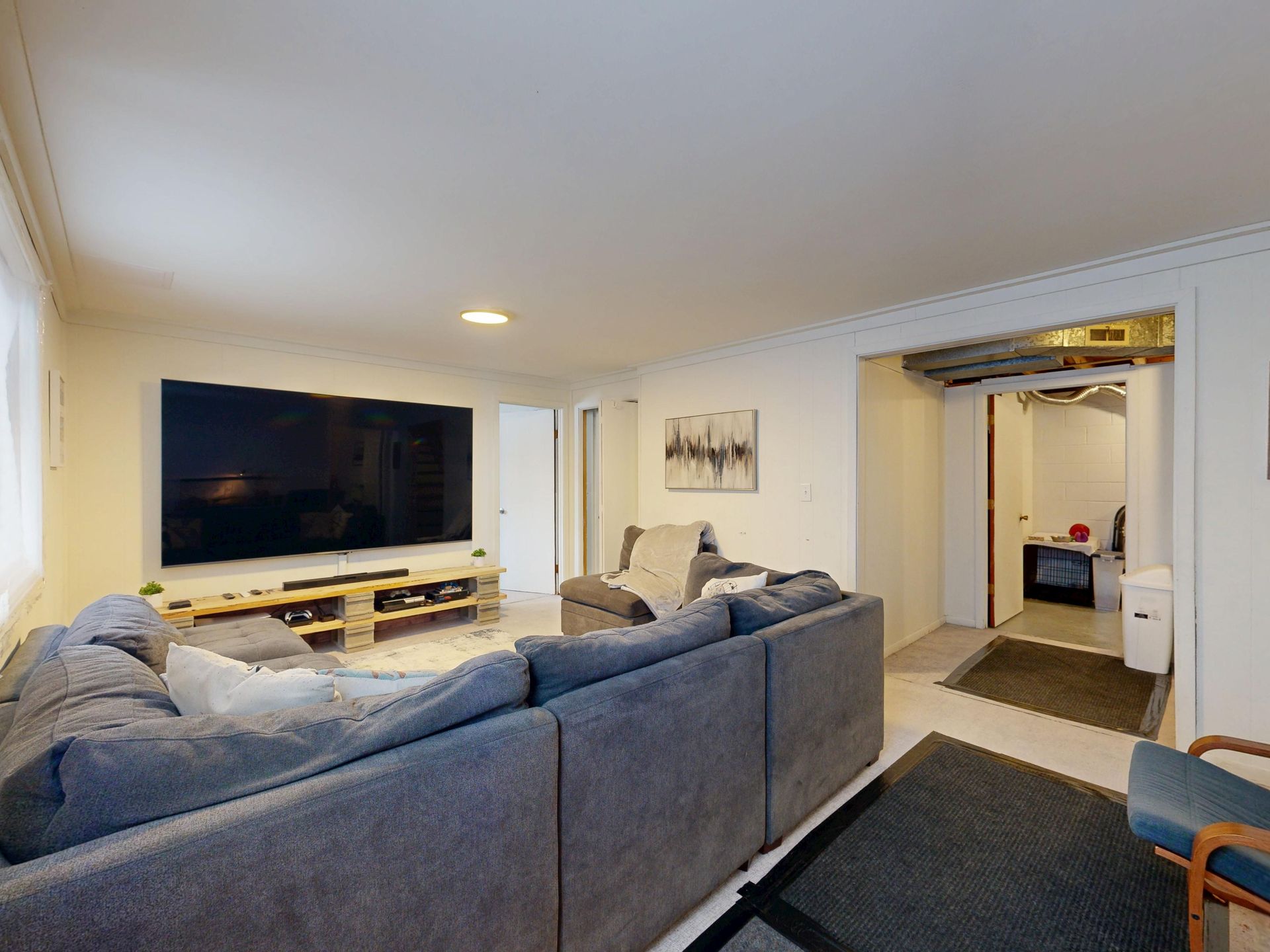
A finished basement with its own kitchen and bathroom can be a real selling point, whether you plan to rent it out or use it for family. But before you factor that income or space into your offer, it's worth knowing what "unpermitted" actually means and what it can cost you down the line.  Why it matters more than it looks A basement apartment is only legal in Ontario when it satisfies three things at once: zoning approval, compliance with the Ontario Building Code, and compliance with the Ontario Fire Code. Miss any one of those and the unit is considered illegal, regardless of how nice the finishes look. And a nice-looking basement tells you nothing about what's happening behind the drywall. The risks are real and specific. Home insurance often won't cover damage or liability connected to an unpermitted unit, particularly after a fire or flood. If a municipality becomes aware of a non-compliant unit, it can issue an order to comply, which may mean opening up walls for inspection or removing the unit entirely. And under the Fire Protection and Prevention Act, non-compliant fire separation can carry fines running into the tens of thousands of dollars. What to look for as a buyer A few signs are worth watching for during showings: a basement that looks freshly finished but has no permit on file with the city, workmanship that seems rushed or inconsistent with the rest of the home, and sellers who are vague or dismissive when asked directly about permits. None of these are dealbreakers on their own, but they're reasons to ask more questions before you write an offer that assumes rental income from that space. What to actually do about it Have your lawyer request and review the municipal property file before closing, which will show whether permits were issued and properly closed out. Ask the seller directly what permits were obtained and whether final inspections were completed. If the basement was finished without permits, it doesn't necessarily mean walk away, but it does mean you should budget for the cost of bringing it up to code (electrical, fire separation, egress windows, and sometimes structural work) rather than assuming the space is worth what a legal unit would be. An offer can also be made conditional on a satisfactory home inspection that specifically flags basement compliance, giving you a chance to negotiate the price or ask the seller to address issues before closing. Where my background helps Having worked in construction before real estate, I can often spot the signs of unpermitted work during a showing that a buyer might miss, and give you a realistic sense of what bringing a space up to code would actually cost. If you're looking at a home with a basement suite, that's exactly the kind of thing worth walking through together before you get attached to the numbers on paper.
Show More